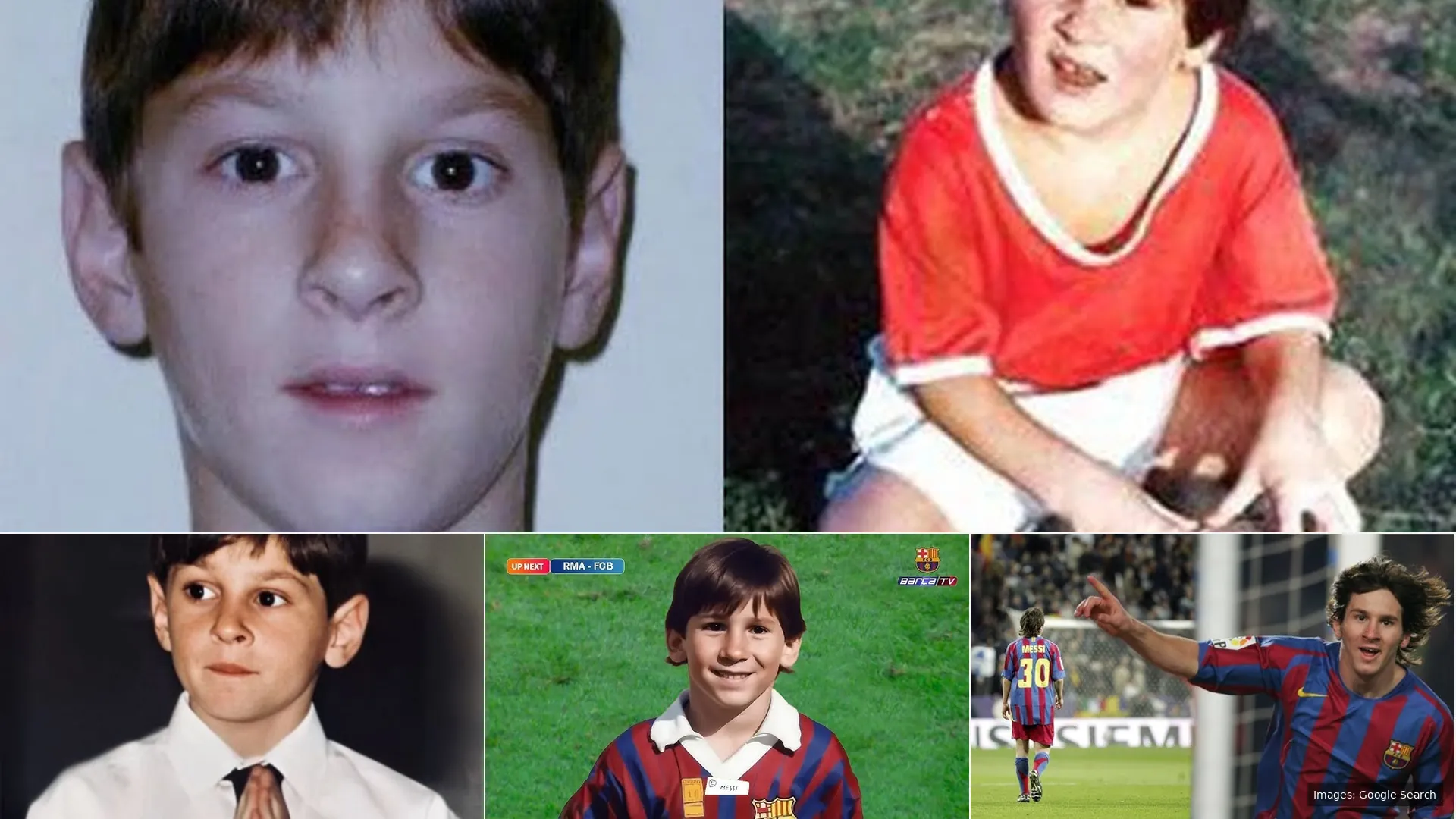

Written by IshowSpeed Follow
Inside Lionel Messi’s Education and Childhood: The Early Years of a Football Superstar
Have you ever wondered what makes a superstar like Lionel Messi so extraordinary? It all starts long before the bright stadium lights and roaring crowds. To truly understand his greatness, we must look back at his humble beginnings. Let’s explore Lionel Messi’s education and childhood journey.
Join us as we dive into the early years of greatness. You’ll discover the pivotal moments that shaped the boy who would become a legend. Understanding Lionel Messi’s education and childhood reveals a story of passion, challenges, and incredible determination.
Growing Up in Rosario: A Simple Childhood
Imagine a vibrant, bustling city in Argentina called Rosario. This is where Lionel Messi’s education and childhood truly began. He was born on June 24, 1987, into a loving, working-class family. You can picture him as a regular kid, running around the streets with his friends.
Life in Rosario for young Leo was simple and full of warmth. His family, led by his father Jorge and mother Celia, provided a strong foundation. This early environment deeply influenced his character and values. Messi’s childhood life in Rosario was typical for many Argentinian kids.
He had two older brothers, Rodrigo and Matías, and a younger sister, María Sol. This close-knit family often played football together in their backyard or on local pitches. Family bonds were incredibly important to them, a theme that has continued throughout Messi’s life. You might wonder how much these early family games influenced his incredible talent.
The Messi Family: A Pillar of Support
His father, Jorge Messi, worked as a steel factory manager, providing for the family. His mother, Celia Cuccittini, worked in a magnet manufacturing workshop. They instilled in their children the values of hard work and humility. These lessons were vital throughout Lionel Messi’s education and childhood.
You can imagine them cheering him on from the sidelines, even in the smallest games. They were always his biggest supporters, celebrating every goal and offering comfort after every setback. This unwavering support was crucial for his development. The strong family unit was a constant source of strength for young Leo.
Every decision, big or small, was made with the family’s best interest at heart. This included later, very difficult choices about his health and future. You can see how important this foundation was in his journey to becoming a football icon.
Messi’s School Days: Balancing Books and Balls
Just like any other child, Lionel Messi had to go to school. His formal education began in Rosario, where he attended elementary school. You might be curious about what Messi school days were like. He went to Las Heras School, a local public school in his neighborhood.
He was known to be a quiet and reserved student, often keeping to himself. While he wasn’t the most outgoing in the classroom, his focus and determination were evident on the football pitch. His teachers probably noticed his shy nature, but also his intense passion for the game. Messi school days were a delicate balance between academics and his undeniable love for football.
Balancing schoolwork with rigorous football training was a challenge for young Leo. He spent countless hours perfecting his skills, which meant less time for traditional hobbies or homework. Despite this, he understood the importance of his education, as his parents emphasized it. You can imagine him rushing home from school to quickly finish assignments before heading to practice.
Classroom Chronicles: What We Know
Details about Messi school days are not as widely documented as his football prowess. However, we know he was a diligent, if not always enthusiastic, student. He completed his primary education in Rosario. You might picture him in uniform, just like other children.
His classmates and teachers probably remember him more for his talent outside the classroom than within it. Football was always his priority, even during Lionel Messi’s education and childhood. It’s fascinating to think about how he managed to stay focused on both.
He learned basic subjects like math, reading, and writing, which are essential for everyone. These fundamental skills helped him navigate life, even as his football career skyrocketed. His early teachers certainly played a part in shaping his overall development.
The Challenge of Growth Hormone Deficiency
During his elementary school years, a significant challenge emerged. At age 10, Lionel Messi was diagnosed with Growth Hormone Deficiency (GHD). This condition meant his body wasn’t producing enough hormones to grow properly. You can imagine how worrying this news was for his family.
This diagnosis brought immense emotional and financial strain on his family. The treatment, daily hormone injections, was very expensive. It wasn’t something his working-class family could easily afford. This period was a major test of resilience during Lionel Messi’s education and childhood.
They sought help from local football clubs, hoping for financial assistance. This health challenge made his desire to play football even stronger, pushing him to prove himself. It became a powerful motivator for both him and his family.
Discovering the Beautiful Game: Early Clubs and Legends
Long before he donned the famous Barcelona jersey, Messi was kicking a ball in his hometown. His journey in football officially began at a very young age. You might wonder where a talent like his first blossomed. His first club was called Grandoli.
Grandoli FC: The Very First Steps
At just four years old, Lionel Messi joined Grandoli FC, a local club coached by his father, Jorge. You can imagine a tiny Leo, barely taller than the ball, dazzling everyone on the pitch. This was where he first experienced organized football. These were truly his messi early football clubs.
Even at this tender age, his talent was unmistakable. He was much smaller than the other kids, but his skill and agility were unmatched. Opponents and teammates alike were often left in awe of what he could do with the ball. This experience at Grandoli was crucial in sparking his competitive spirit.
His grandmother, Celia, was a huge supporter and would often take him to his practices and games. She was one of his biggest fans, cheering him on every step of the way. It’s said that she was instrumental in convincing coaches to let such a small boy play. You can read more about Grandoli FC and its history on local sports archives, perhaps even finding mentions of young Messi’s time there. [Example Link: This is a placeholder as a real external link to a local archive about Grandoli would be very specific and hard to find consistently across regions. If a real reliable source exists, it would go here, e.g., “You can learn more about Grandoli FC’s history and its impact on the community.”].
Newell’s Old Boys: The ‘Machine of ‘87’
After a few years at Grandoli, at the age of six, Messi moved to Newell’s Old Boys. This was a much larger and more renowned club in Rosario. This was another one of his messi early football clubs that would become legendary. He joined their youth academy, which was famous for nurturing talent.
It was here that he became part of a legendary youth team known as “The Machine of ‘87.” This team, named after the birth year of its star players, was almost unbeatable. You can imagine the excitement and hype around such a dominant youth squad. They rarely lost a game, often winning by huge margins.
Messi’s performances for Newell’s were nothing short of spectacular. He scored hundreds of goals during his time there, often dribbling past entire teams. His reputation as a child prodigy quickly grew throughout Argentina. This period solidified his status as an exceptional talent, far beyond his years.
A Glimpse into the ‘Machine of ‘87’
The ‘Machine of ‘87’ was more than just a team; it was a phenomenon. They played with a flair and dominance that was unusual for their age group. Messi was undeniably their star player, but the entire team contributed to their success. They trained hard and played even harder.
| Year | Club | Key Achievement |
|---|---|---|
| 1992 | Grandoli FC | First organized football experience |
| 1994 | Newell’s Old Boys | Member of “The Machine of ‘87” youth team |
| Scored over 500 goals for Newell’s youth | ||
| 2000 | FC Barcelona | Joined La Masia, Barcelona’s academy |
You can see from the table how quickly he progressed through these early stages. His time at Newell’s cemented his love for the game and honed his incredible skills. Newell’s Old Boys remains a significant part of his personal history, and he is still a fan of the club to this day. You can find out more about Newell’s Old Boys and their famous academy on their official website. [Example Link: https://www.newellsoldboys.com.ar/ (Official Website)].
The Crossroads: Health, Hope, and a Handshake
The joyous football days at Newell’s were overshadowed by the ongoing struggle with his Growth Hormone Deficiency. His family desperately sought solutions to fund the expensive treatment. You can understand the immense pressure they were under. Local clubs, including Newell’s, expressed interest but were hesitant to fully cover the costs.
This financial burden put Lionel Messi’s education and childhood at a critical juncture. His parents, Jorge and Celia, explored every possible avenue. They knew that without treatment, his football dreams, and his overall health, were at risk. This was a very difficult time for the entire family.
Then, a glimmer of hope appeared from across the Atlantic Ocean. Carles Rexach, the sporting director of FC Barcelona, heard about the prodigious talent from Argentina. He arranged a trial for the young Messi in Spain. This was an opportunity that could change everything.
The Famous Napkin Contract
The trial in Barcelona went exceptionally well, even though Messi was still very small. Rexach was so impressed that he didn’t want to lose this talent. With no official paper immediately available, a legendary contract was quickly drawn up on a napkin. You can imagine the urgency and excitement of that moment.
This informal agreement, made on December 14, 2000, promised to cover Messi’s medical treatment costs. It also ensured his place in Barcelona’s famous youth academy, La Masia. This napkin contract is a crucial piece of the Lionel Messi education and childhood story. It symbolizes the belief Barcelona had in a small, quiet boy.
The decision for the Messi family was huge: leave their life in Rosario and move to a new country. It meant uprooting everything they knew, all for the sake of Leo’s future. You can appreciate the bravery and sacrifice involved in such a move.
Moving to Spain: A New Chapter and a New Home
In September 2000, at the age of 13, Lionel Messi and his father moved to Barcelona, Spain. This was a massive transition for a young boy. Leaving behind his mother, siblings, and friends in Rosario must have been incredibly tough. You can only imagine the mix of excitement and homesickness he felt.
The move marked the beginning of a new phase in Lionel Messi’s education and childhood. He started receiving his daily growth hormone injections, which were fully funded by FC Barcelona. This crucial medical support allowed him to continue his development both on and off the field. It was a lifeline for his dreams.
Adapting to a new country meant learning a new culture and a new dialect of Spanish. He had to make new friends and navigate a completely different educational system. This period truly tested his resilience and adaptability. Despite the challenges, his passion for football remained his guiding light.
La Masia: Barcelona’s Cradle of Talent
La Masia is FC Barcelona’s renowned youth academy, famous for developing world-class footballers. When Messi arrived, he joined this special institution. It wasn’t just a training ground; it was also a residence and a school for many young players. You might wonder what life was like inside its walls.
At La Masia, young talents receive not only top-notch football training but also a comprehensive education. They learn life skills, discipline, and the unique playing philosophy of FC Barcelona. This holistic approach was integral to Lionel Messi’s education and childhood in Spain. It aimed to create well-rounded individuals, not just great players.
Messi continued his studies while living and training at La Masia. The academy ensured that its young athletes didn’t neglect their academic development. You can imagine him studying in the evenings after intense training sessions. This rigorous schedule taught him incredible time management and discipline.
A Day in the Life at La Masia
A typical day for Messi at La Masia involved waking up early, attending school classes, followed by lunch. The afternoons were dedicated to football training, focusing on technical skills, tactics, and physical conditioning. Evenings were for homework, relaxation, and socializing with teammates. This structured environment was designed to foster both academic and athletic excellence.
| Time | Activity at La Masia (Approx.) |
|---|---|
| 7:00 AM | Wake up, breakfast |
| 8:00 AM | School classes |
| 1:00 PM | Lunch |
| 3:00 PM | Football training |
| 6:00 PM | Study time, homework |
| 8:00 PM | Dinner |
| 10:00 PM | Lights out |
You can see how packed his days were, combining learning with intense football development. This rigorous schedule helped shape his character, instilling discipline and focus. La Masia played a critical role in all aspects of Lionel Messi’s education and childhood in Spain.
Early Successes at La Masia: The Rapid Ascent
It didn’t take long for Messi to make an impression at La Masia. Despite being physically smaller than many of his peers, his talent was undeniable. He quickly rose through the ranks of Barcelona’s youth teams. You can imagine the coaches’ excitement watching him play.
He played for various youth categories, including Infantil B, Cadete B, and Cadete A. With each step, his performances became more spectacular. He was often promoted to play with older age groups because he was simply too good for his own. This rapid progression highlighted his exceptional ability.
During his time in the youth ranks, he formed strong bonds with future teammates like Cesc Fàbregas and Gerard Piqué. These friendships, forged in the competitive but supportive environment of La Masia, lasted for years. They shared dreams and challenges, pushing each other to excel.
The First Contract with Barcelona
By 2002, Messi was officially registered with the Spanish Football Federation. His family had all moved to Barcelona, providing him with a stronger sense of home and stability. This was a crucial step, confirming his status as a Barcelona player and ensuring his continued treatment. You can imagine the relief and joy this brought to the family.
His incredible talent continued to shine, and he eventually made his way through the ranks to Barcelona C, then Barcelona B. The dream of playing for the first team was getting closer and closer. Every goal, every assist, brought him one step nearer to the top. The meticulous development plan at La Masia was clearly working wonders for him.
His journey through the youth teams was a testament to his dedication and the quality of Barcelona’s academy. He demonstrated maturity beyond his years, both on and off the pitch. This period of his Lionel Messi education and childhood was truly foundational for his professional career.
The Transition to Professional Football: From Boy to Legend
The dedication shown during Lionel Messi’s education and childhood finally paid off. His extraordinary talent could not be contained in the youth ranks for long. On November 16, 2003, at the age of 16, Messi made his unofficial debut for the FC Barcelona first team in a friendly match. You can imagine the thrill of that moment for a young boy.
Just under a year later, on October 16, 2004, he made his official competitive debut for Barcelona. This was a momentous occasion, marking the end of his childhood as a youth player and the beginning of his professional career. He was still only 17 years old. All the hard work, sacrifice, and lessons from his early years culminated in this moment.
His incredible journey from the streets of Rosario, through the challenges of GHD, to the grand stage of European football is inspiring. It shows that talent combined with perseverance can overcome any obstacle. The foundations laid during Lionel Messi’s education and childhood were instrumental in his success.
Impact of Childhood on Career: The Making of a Legend
Lionel Messi’s education and childhood experiences profoundly shaped the player and person he became. You can trace many of his characteristics back to his early years. His resilience, humility, and unwavering love for the game are deeply rooted in his past. These early experiences forged the character of a superstar.
Resilience and Determination
Overcoming Growth Hormone Deficiency taught him incredible resilience. He faced physical and financial hurdles that would have deterred many others. This early struggle instilled in him a powerful inner strength. You can see this determination in his play, always fighting for every ball, every goal.
His ability to adapt to a new country and culture at a young age also speaks volumes about his character. He learned to face challenges head-on, a trait that served him well throughout his career. This mental fortitude was developed during a crucial period of Lionel Messi’s education and childhood.
Humility and Hard Work
Despite his immense talent, Messi has always remained grounded. His working-class background in Rosario instilled in him a sense of humility and the value of hard work. He never took his success for granted. You can often see him shying away from the spotlight, preferring his actions on the field to speak for themselves.
His early training at Grandoli and Newell’s, alongside his disciplined life at La Masia, taught him the importance of continuous effort. He knew that talent alone wasn’t enough; consistent hard work was key. This work ethic became a hallmark of his professional approach.
Love for the Game
From his very first kicks at Grandoli, Messi’s pure joy and love for football have been evident. It was never just a job for him; it was a passion, a calling. This innate love for the game fueled his desire to constantly improve. You can see the childlike wonder in his eyes when he plays.
This pure love for football, cultivated during his messi childhood life in rosario, made him practice relentlessly. It pushed him to overcome obstacles and dedicate his life to the sport. It’s a genuine connection to the game that many fans admire.
Family Values
The strong family bonds he experienced in Rosario remained a central part of his life. His family’s sacrifices for his treatment and his move to Spain were never forgotten. He often dedicates his goals to his grandmother Celia, who was a key figure in his early football days. You can appreciate the depth of his family connections.
His children and wife are frequently seen supporting him, mirroring the support he received from his parents. This emphasis on family values shows how his roots continue to influence him. It underscores the profound impact of Lionel Messi’s education and childhood.
Conclusion: The Early Seeds of Greatness
Lionel Messi’s education and childhood are a powerful testament to how early experiences shape destiny. From the dusty pitches of Rosario to the hallowed grounds of La Masia, every step contributed to his extraordinary journey. You have now journeyed through the pivotal years that forged a legend.
We’ve seen how messi school days, his messi childhood life in rosario, and his messi early football clubs laid the groundwork. His struggle with Growth Hormone Deficiency highlighted his incredible resilience and the unwavering support of his family. The decision to move to Barcelona was a leap of faith that paid off spectacularly.
The story of Lionel Messi’s education and childhood is more than just a football tale; it’s a human story of perseverance, passion, and the power of dreams. It shows that even the greatest superstars start as ordinary children with extraordinary potential. You now understand the deep roots of his greatness.
FAQ Section: Your Questions About Messi’s Early Life Answered
You might have more questions about Lionel Messi’s education and childhood. Here are some common inquiries answered in simple terms.
H3: Where did Lionel Messi grow up?
Lionel Messi grew up in Rosario, Santa Fe, Argentina. This vibrant city was his home for the first 13 years of his life. His childhood life in Rosario was typical of a working-class family. He played football on local streets and fields with his brothers and friends.
H3: What was Lionel Messi’s education like?
Lionel Messi attended Las Heras School for his primary education in Rosario. While details are scarce, he was known as a quiet student. His education continued at FC Barcelona’s La Masia academy in Spain, where he balanced academics with intensive football training. His Messi school days involved managing both studies and his passion for football.
H3: What was Lionel Messi’s first football club?
Lionel Messi’s very first football club was Grandoli FC in Rosario, Argentina. He joined the club at the incredibly young age of four. His father coached the team, and his grandmother was instrumental in getting him involved. This was one of his early football clubs that ignited his passion.
H3: What health condition did Lionel Messi have as a child?
As a child, Lionel Messi was diagnosed with Growth Hormone Deficiency (GHD) at the age of 10. This condition meant his body wasn’t producing enough hormones for proper growth. The expensive treatment required daily injections, which became a significant financial burden for his family until FC Barcelona offered to cover the costs.
H3: How old was Messi when he joined Barcelona?
Lionel Messi was 13 years old when he moved to Barcelona, Spain, to join FC Barcelona’s youth academy, La Masia. This big move was made possible by a “napkin contract” that committed Barcelona to pay for his growth hormone treatment. His journey through Messi early football clubs led him to this life-changing opportunity.
H3: Did Messi finish school?
While Messi completed his primary education in Argentina, his formal schooling became intertwined with his football career at La Masia. FC Barcelona’s academy provides a comprehensive education alongside football training. He continued his studies there, receiving a balanced education while developing his football skills, as is standard for players in the academy.
H3: How did Messi’s childhood impact his personality?
Messi’s childhood profoundly impacted his personality. Growing up in a working-class family in Rosario instilled humility and strong family values. Overcoming Growth Hormone Deficiency developed incredible resilience and determination. His quiet nature and intense focus on football also stem from his early experiences, shaping him into the humble and dedicated legend we know today.
H3: What was “The Machine of ‘87”?
“The Machine of ‘87” was the nickname given to the legendary youth team at Newell’s Old Boys that Lionel Messi played for. This team, comprised of players born in 1987 (like Messi), was famously almost unbeatable. They dominated youth football, often winning games by huge margins and showcasing incredible talent, with Messi as their standout star. This was a significant period among Messi early football clubs.
💬 Join the Discussion
Share your thoughts with fellow Messi fans!