
Written by IshowSpeed Follow
From Classroom to Football Field: Lionel Messi’s Education and Childhood Journey
Childhood dreams begin in many places, maybe in a schoolyard, a backyard, or even just inside your imagination. For a small boy named Lionel Messi, his biggest dreams began on the dusty football fields of Argentina. This is the amazing story of Lionel Messi’s education and childhood, a journey that took him from a regular kid to a global superstar. You will discover how his early life shaped the incredible player we know today.
We will look closely at Lionel Messi’s education and childhood, understanding the challenges he faced. Get ready to explore his early days, his school adventures, and the special training that made him so good. This tale is about hard work, overcoming difficulties, and never giving up on your biggest dream.
H2: Messi’s Early Life in Rosario: Where Dreams Kicked Off
Lionel Messi was born on June 24, 1987, in a vibrant city called Rosario, Argentina. Imagine a place buzzing with energy, where the air often smells of delicious food and the sound of children playing fills the streets. This was the setting for Messi’s early life, a normal start for an extraordinary boy. He grew up in a close-knit family, with his father Jorge, his mother Celia, and three siblings: two older brothers, Rodrigo and Matías, and a younger sister, María Sol.
His family was his first team, always cheering him on and giving him love. They lived in a simple house, full of laughter and the usual busy family life. Even as a tiny tot, Leo, as everyone called him, had a special connection with a football. It seemed like the ball was an extension of his own body, moving with him everywhere he went.
You see, in Argentina, football isn’t just a game; it’s a way of life, a passion that runs deep in everyone’s hearts. Little Leo breathed, ate, and slept football from the moment he could walk. This early passion was the very foundation of Lionel Messi’s education and childhood journey. He wasn’t just playing; he was learning the language of the beautiful game.
H3: The First Kicks: Grandoli and Newell’s Old Boys
Every great story has a beginning, and for Messi, his official football journey started at a small local club called Grandoli. His grandmother, Celia, was a huge supporter and actually pushed for him to play when he was only four years old. She believed in his talent before anyone else truly did, watching him weave magic with his tiny feet.
He was so small compared to the other kids, but his skill shone brighter than the biggest floodlights. It wasn’t long before everyone noticed this little wonder. After just a few years at Grandoli, his talent became impossible to ignore. His abilities quickly caught the eye of bigger clubs.
At the age of six, he joined the youth system of Newell’s Old Boys, one of the biggest clubs in Rosario. This was a crucial step in Messi’s early life, marking the start of more structured training. Newell’s Old Boys is a famous club in Argentina, known for its strong youth academy. You can learn more about their history here: Newell’s Old Boys Wikipedia.
His time at Newell’s Old Boys was where his natural gift truly began to blossom. He played for their youth team, affectionately known as “The Machine of ‘87,” because they were almost unbeatable. Messi’s childhood training here was intense but incredibly fun for him. He scored countless goals and often dribbled past entire teams, leaving everyone speechless.
H2: Messi’s School Life: Balancing Books and Balls
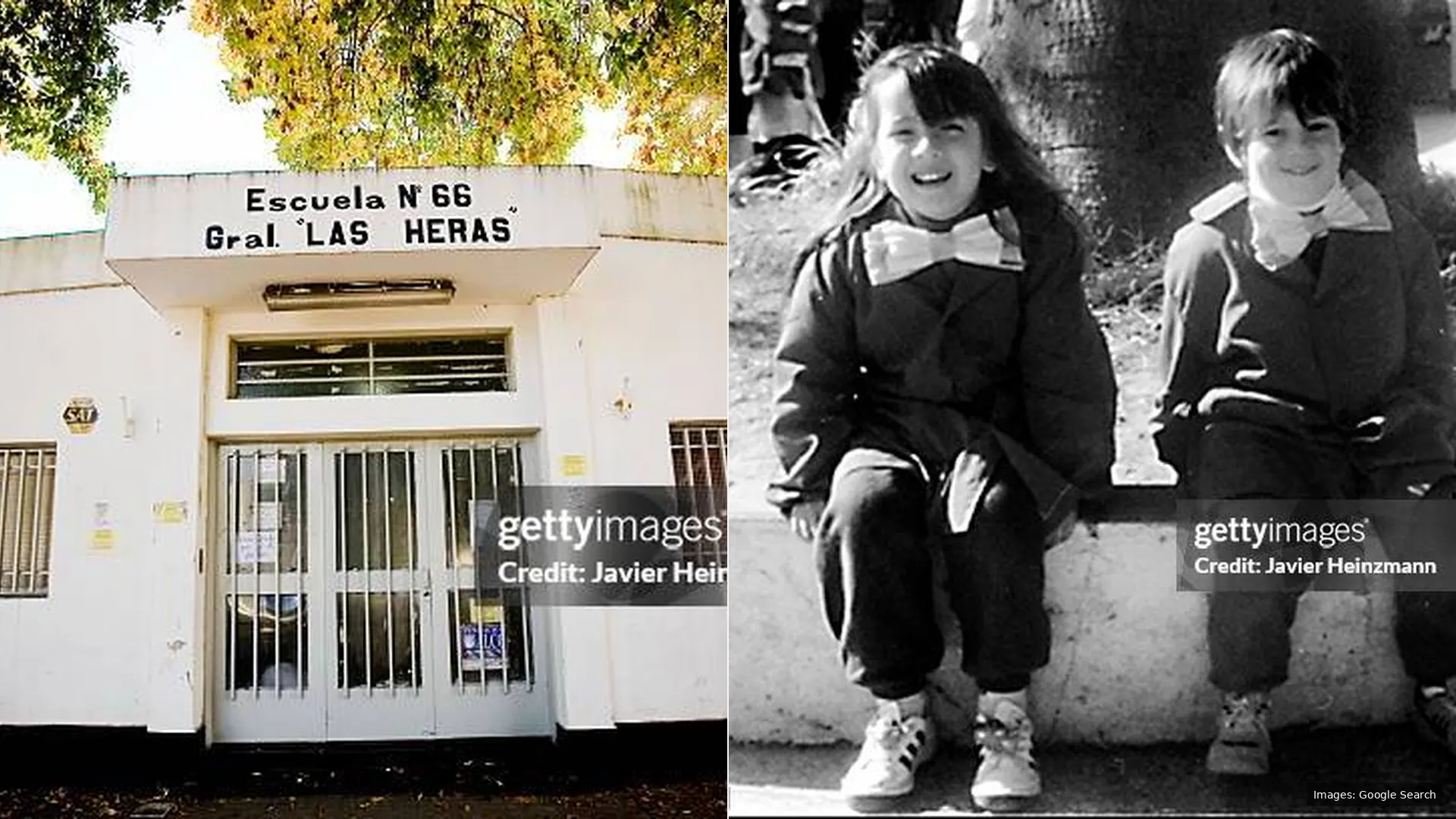
While football was always his biggest love, Lionel Messi also went to school, just like you. Messi’s school life was likely a mix of typical classroom learning and an overwhelming desire to get back on the pitch. We don’t hear much about his academic achievements because his football talent was so extraordinary. However, it’s safe to say he had a normal primary school experience in Rosario.
He attended Las Heras primary school in Rosario, trying to balance his studies with his demanding football schedule. Imagine trying to finish your homework after an intense training session, or daydreaming about scoring goals during a math lesson! This was a common challenge during Lionel Messi’s education and childhood. It’s a reminder that even future superstars have to go to school.
It is believed that he was a quiet and focused student, though probably more excited about football breaks than academic lessons. His teachers might have noticed his determination and concentration, qualities that served him well on the field. Messi’s school life likely taught him discipline and routine, important lessons for any young person.
These everyday experiences, balancing school and sport, contributed to his overall development. They were part of the fabric of Lionel Messi’s education and childhood, shaping him into a well-rounded individual. Although football dominated his world, his time in the classroom provided a different kind of learning experience.
H3: The Classroom vs. The Pitch: A Constant Tug-of-War
For Messi, the football pitch was his true classroom, where he learned the most valuable lessons. He learned about teamwork, strategy, and pushing his physical limits with every game. This hands-on learning was probably more exciting than any textbook. However, formal schooling provides a different foundation.
It teaches critical thinking, reading, and writing, which are essential life skills. Even though Messi’s focus was clear, his general education provided him with a basic understanding of the world. He navigated both worlds, the academic and the athletic, during his formative years. This tug-of-war between school and sport is something many talented young athletes experience.
His childhood education was likely disrupted and then continued in different forms as his career took off. But the early lessons in school, however brief, were still part of his journey. They contributed to the complete picture of Lionel Messi’s education and childhood, a period of immense growth and learning.
You can imagine him, a small, quiet boy in class, but transformed into a whirlwind of energy once a football was at his feet. This contrast highlights the powerful allure football had for him. It was more than a hobby; it was his destiny calling.
H2: The Challenge of Growth: A Small Problem with Big Implications
As Lionel Messi grew, or rather, struggled to grow, a serious medical condition emerged. When he was 10 years old, doctors diagnosed him with Growth Hormone Deficiency (GHD). This meant his body wasn’t making enough of the hormones needed for him to grow properly. It was a huge setback for a boy whose dreams involved playing professional football.
Imagine being told that your body isn’t growing as it should, and that it could stop you from achieving your biggest dreams. This was a terrifying reality for young Leo and his family. The treatment involved daily injections, which were expensive and needed to be done for several years. This created a huge financial burden for his family, who already lived modestly.
This health challenge was a major part of Lionel Messi’s education and childhood. It wasn’t just about his physical growth; it was about the mental strength required to face such an obstacle. His family tried to find ways to pay for the treatment, reaching out to different clubs for help. It was a desperate time, as his talent was obvious, but his future was uncertain.
His local club, Newell’s Old Boys, initially agreed to help, but financial difficulties meant they couldn’t continue paying the full cost. This left Messi’s dream hanging by a thread. But sometimes, when one door closes, a window opens, leading to a whole new world of possibilities.
H3: A Glimmer of Hope: The Eyes of Barcelona
News of this incredibly talented but small boy eventually reached Europe, specifically one of the biggest football clubs in the world: FC Barcelona. They had heard whispers of a prodigy in Argentina, a kid who could do unbelievable things with a football. Messi’s agent arranged a trial for him with the Catalan giants. This trial was a defining moment in Messi’s early life.
At just 13 years old, Messi traveled with his father to Barcelona, Spain. It was a massive leap for a young boy, leaving behind everything familiar. He was a long way from Rosario, facing a new culture and a new language. But the football field was a language he already spoke fluently.
During his trial, he impressed everyone, even the legendary Carles Rexach, who was the sporting director at the time. Rexach was so amazed by Messi’s skill that he didn’t want to lose him. There was no official contract paper readily available, so he famously wrote a contract on a napkin right then and there. This napkin contract is now a famous part of football history.
This incredible offer meant that FC Barcelona would not only sign Messi but also pay for all his expensive growth hormone treatment. It was a lifeline, a chance for him to grow tall and strong enough to fulfill his potential. This decision changed the course of Lionel Messi’s education and childhood forever. It was a massive opportunity but also came with big sacrifices.
H2: Life at La Masia: Football and Education Combined
Moving to Barcelona meant a new chapter for Lionel Messi’s education and childhood. He joined La Masia, Barcelona’s famous youth academy. La Masia is not just a football school; it’s a unique boarding school where young players live, study, and train together. It’s designed to nurture not only football talent but also personal growth.
Imagine living in a place where your best friends are also your teammates, and every day is focused on becoming a better footballer and a better person. This was Messi’s new home. La Masia emphasizes a specific style of play, known as “tiki-taka,” but also instills strong values like respect, humility, and hard work. You can learn more about La Masia here: FC Barcelona La Masia.
Messi’s school life continued within La Masia’s structured environment. He attended classes alongside his teammates, making sure his academic education didn’t fall behind. This meant balancing schoolwork with rigorous training sessions, eating healthy meals, and learning to live independently. It was a tough adjustment for any teenager, let alone one battling a medical condition and living thousands of miles from his family.
Leaving his family and friends behind in Argentina was incredibly difficult. Messi was often quiet and homesick, but his love for football kept him going. The dream of becoming a professional player, and the gratitude for Barcelona’s help, fueled his determination. This intense period of Lionel Messi’s education and childhood shaped his character immensely.
H3: The La Masia Philosophy: More Than Just Football
La Masia’s philosophy is about creating well-rounded individuals, not just great footballers. They believed in educating the person as much as the player. This holistic approach was vital during Messi’s childhood training. He wasn’t just learning how to dribble and score; he was learning life skills, responsibility, and discipline.
Here’s a quick look at what La Masia emphasized:
- Academic Studies: Regular classes to ensure a solid education.
- Football Training: World-class coaching focused on Barcelona’s unique playing style.
- Values: Humility, effort, ambition, respect, and teamwork.
- Personal Development: Learning to live away from home, manage time, and be independent.
This environment provided a complete Lionel Messi education and childhood experience. He was surrounded by other talented young players who shared the same dreams. The competition was fierce, but it pushed everyone to be their best. Messi thrived in this setting, absorbing every lesson, both on and off the pitch.
He continued his growth hormone treatment diligently, seeing his body slowly but surely respond. With each passing day, he grew taller and stronger, getting closer to his full potential. His dedication to his treatment was a testament to his incredible will and belief in his dream. His time at La Masia was truly transformative.
H3: Early Successes and Rapid Ascent at Barcelona
Messi’s exceptional talent quickly became apparent even among the elite talents at La Masia. He moved rapidly through Barcelona’s youth ranks, often playing with older age groups. His dribbling, vision, and goal-scoring ability were simply unmatched. It was clear he was on a fast track to the first team.
During his childhood training at La Masia, he set records and won titles with every youth team he played for. He formed incredible bonds with future stars like Cesc Fàbregas and Gerard Piqué. This period was a whirlwind of success and constant learning for young Leo. His Messi early life experiences had prepared him for this high-pressure environment.
The transition from youth football to professional was smoother for Messi than for many others. His natural talent, combined with the rigorous training at La Masia, made him ready. The lessons from his Lionel Messi education and childhood, especially the discipline and resilience gained from his GHD treatment, had forged an incredibly determined individual. He was ready for the big stage.
His professional debut for Barcelona came at a remarkably young age, a testament to his undeniable skill. He broke records for being the youngest player to score for the club. This was the culmination of years of hard work, sacrifice, and an unwavering belief in himself. His childhood dream was no longer just a dream; it was becoming a stunning reality.
H2: The Impact of Childhood on Messi’s Play Style
The challenges and experiences of Lionel Messi’s education and childhood deeply influenced the player he became. His small stature, due to his GHD, forced him to develop incredible balance, agility, and a low center of gravity. This made him almost impossible to tackle, allowing him to weave through defenders with ease. His dribbling skills, legendary today, are a direct result of these early physical adaptations.
His quiet nature, perhaps a consequence of his homesickness and the difficulties he faced, translated into a focused and humble approach to the game. He rarely showed off or engaged in theatrics; his football did all the talking. This humility and work ethic are hallmarks of his personality, born from his grounded early life. You can still see this quiet determination in every game he plays.
The rigorous Messi childhood training at Newell’s Old Boys and especially at La Masia instilled in him Barcelona’s unique playing philosophy. He learned to understand the game, not just physically but mentally, anticipating plays and moving with incredible intelligence. His vision and passing ability, often overshadowed by his goal-scoring, are products of this comprehensive football education.
His perseverance through his growth hormone deficiency taught him immense resilience. He learned to overcome adversity, to push through pain, and to never give up on his goals. This mental toughness is a critical part of his legendary clutch performances. Every challenge in Lionel Messi’s education and childhood prepared him for the pressures of professional football.
H3: From Street Football to Strategic Brilliance
Think about the street football he played in Rosario as a young boy, spontaneous and full of tricks. This raw, creative freedom blended perfectly with the structured, strategic training he received at La Masia. It gave him the best of both worlds: the unpredictable genius of a street footballer combined with the tactical discipline of a highly trained academy product.
His Messi early life taught him to improvise and solve problems on the fly. Then, his La Masia training taught him the importance of positional play, passing triangles, and collective movement. This unique blend made him an unparalleled force on the field. You can see his street smarts in his audacious dribbles and his La Masia education in his precise passes and tactical awareness.
His journey through Lionel Messi’s education and childhood was a masterclass in development. It was a perfect storm of natural talent meeting the right environment and facing just enough adversity to forge an unbreakable spirit. Every kick, every lesson, every injection, every tear contributed to the creation of a footballing genius.
This journey highlights how foundational experiences truly shape who we become. Messi’s story is a powerful reminder that even the biggest stars start small, facing challenges and learning valuable lessons along the way. His path from the classroom to the football field is an inspiration to all.
H2: Messi’s Legacy Beyond the Field: Inspiring the Next Generation
Lionel Messi’s impact extends far beyond the football field. His incredible journey, especially the story of Lionel Messi’s education and childhood, serves as a powerful inspiration to millions around the world. He shows that with talent, hard work, and determination, you can overcome even the biggest obstacles. His battle with Growth Hormone Deficiency resonates with many, demonstrating that physical limitations don’t have to define your destiny.
He embodies the idea that greatness often comes from humble beginnings. His story encourages young kids everywhere to pursue their dreams relentlessly, just as he did. Messi’s early life taught him the value of family and support, lessons he carries with him today. He often speaks about the importance of his family’s sacrifices in his success.
Through the Leo Messi Foundation, he gives back to the community, especially focusing on children’s health and education. This foundation works to ensure that other children don’t have to face the same struggles he did without support. It provides aid for medical treatment, education, and sports development programs for vulnerable children. His own Lionel Messi education and childhood challenges have made him incredibly empathetic.
You can learn more about his foundation’s important work here: Leo Messi Foundation. His work off the pitch is a testament to the values he learned throughout his life. He uses his global platform to make a positive difference, proving that true champions inspire both on and off the field.
H3: A Role Model of Perseverance
Messi’s journey is a vivid example of perseverance in the face of adversity. He wasn’t the biggest, the strongest, or even the loudest, but he had an unwavering belief in his abilities. His dedication to his Messi childhood training and treatment shows a maturity beyond his years. This resilience is a key message in his story for young people.
He teaches us that setbacks are not the end, but rather opportunities to grow stronger. His quiet determination, his focus on the game, and his humble demeanor make him an ideal role model. He inspires countless children to pick up a ball, go to practice, and work hard at whatever they choose to do. His story reminds us that hard work pays off.
The narrative of Lionel Messi’s education and childhood is one of hope and triumph. It’s a journey filled with sacrifices, big decisions, and incredible talent. But most importantly, it’s a story about a boy who never stopped chasing his dream. And in doing so, he became one of the greatest athletes the world has ever seen.
His legacy is not just about the trophies he has won, but about the lives he has touched and the dreams he has ignited. He is a living legend, whose early life laid the foundation for an extraordinary career and a meaningful impact on the world. His life proves that anything is possible if you believe in yourself.
H2: Key Milestones in Messi’s Early Journey
Let’s look at some important moments in Lionel Messi’s education and childhood through a timeline. This helps us see how quickly his life changed and how many big steps he took. These moments were crucial in shaping the legend he became.
| Year | Age | Event | Significance | Keyword Relevance |
|---|---|---|---|---|
| 1987 | 0 | Born in Rosario, Argentina | Start of Messi’s early life. | Messi early life |
| 1991 | 4 | Joins Grandoli (local club) | First organized football experience, pushed by grandmother. | Messi childhood training |
| 1993 | 6 | Joins Newell’s Old Boys youth team | Entry into a major club’s academy, more structured Messi childhood training. |
Messi childhood training |
| 1997 | 10 | Diagnosed with Growth Hormone Deficiency | Major health challenge, financial burden for family. Crucial part of Lionel Messi education and childhood. |
Lionel Messi education and childhood |
| 2000 | 13 | Trial at FC Barcelona | Leads to “napkin contract,” Barcelona offers to pay for GHD treatment. | Messi early life |
| 2000 | 13 | Moves to La Masia (Barcelona’s academy) | Begins integrated football and academic education in Spain. Start of his Messi school life in Barcelona. |
Lionel Messi education and childhood, Messi school life |
| 2001 | 14 | Registers with the Royal Spanish Football Federation | Officially allowed to play for Barcelona’s youth teams. | Messi childhood training |
| 2003 | 16 | Debuts for Barcelona C and Barcelona B teams | Rapid progress through the youth ranks, showing readiness for professional football. | Messi childhood training |
| 2004 | 17 | Official First Team Debut (Friendly) | Plays against Porto, first taste of senior football. | Messi early life |
| 2004 | 17 | Official La Liga Debut | Makes his league debut against Espanyol. The start of his professional career. | Lionel Messi education and childhood |
This table clearly shows the quick progression and the significant turning points in his early years. Each step was vital for his development. It illustrates the incredible pace of his journey.
H2: The Importance of Perseverance: A Snippet of Wisdom
Snippet: Lionel Messi’s education and childhood is a testament to the power of perseverance. Despite facing a rare growth condition and the immense challenge of moving to a new country at a young age, he never stopped working towards his dream. His story teaches us that true greatness is built on hard work, dedication, and an unshakeable belief in yourself, no matter how tough the journey gets. He reminds us that with enough courage, childhood dreams really can come true.
H2: Frequently Asked Questions about Lionel Messi’s Education and Childhood
Do you have more questions about Lionel Messi’s amazing start in life? Here are some common questions and their answers.
H3: Q1: Where did Lionel Messi grow up?
Lionel Messi grew up in Rosario, Argentina, a lively city known for its passion for football. This is where he spent his entire Messi early life before moving to Spain at 13. His roots in Rosario are very important to him.
H3: Q2: Did Lionel Messi go to school?
Yes, Lionel Messi did go to school, like all children. He attended primary school in Rosario and continued his academic education at La Masia, FC Barcelona’s youth academy, after moving to Spain. His Messi school life was definitely busy.
H3: Q3: What medical condition did Lionel Messi have as a child?
As a child, Lionel Messi was diagnosed with Growth Hormone Deficiency (GHD). This condition meant his body didn’t produce enough hormones needed for proper growth. This was a major challenge in Lionel Messi education and childhood.
H3: Q4: How did FC Barcelona help Messi with his condition?
FC Barcelona famously offered to pay for all of Messi’s expensive growth hormone treatment when he signed with their youth academy, La Masia, at age 13. This was a life-changing opportunity for him and his family. This decision was pivotal in his Messi early life.
H3: Q5: What was Messi’s first football club?
Lionel Messi’s very first football club was Grandoli, a small local team in Rosario, Argentina. He started playing there when he was just four years old. His Messi childhood training started very early.
H3: Q6: What is La Masia, and how did it affect Messi?
La Masia is FC Barcelona’s renowned youth academy, where young talents live, study, and train. It profoundly affected Messi by providing world-class Messi childhood training, continuing his Messi school life, and instilling important values. It was a crucial part of Lionel Messi education and childhood.
H3: Q7: Was Messi a good student in school?
While not much is widely known about his academic performance, Messi was described as a quiet and focused student. It’s safe to say his passion and main focus were always on football. His Messi school life was likely overshadowed by his football brilliance.
H3: Q8: How old was Messi when he moved to Barcelona?
Lionel Messi was 13 years old when he moved from Rosario, Argentina, to Barcelona, Spain, to join FC Barcelona’s youth academy, La Masia. This was a significant transition in his Messi early life.
H3: Q9: How did Messi’s childhood influence his playing style?
Messi’s childhood greatly influenced his playing style. His small stature (due to GHD) led to incredible balance and agility. His street football background in Rosario gave him raw creativity, while La Masia instilled tactical discipline and vision. His perseverance from his GHD battle also forged his mental toughness. This unique Lionel Messi education and childhood journey created his distinct style.
H3: Q10: What did Messi learn from his childhood training?
From his Messi childhood training at Grandoli and Newell’s Old Boys, he learned raw skill, dribbling, and a deep love for the game. At La Masia, he learned strategic play, teamwork, discipline, and the values of FC Barcelona. These experiences combined into his unique football education.
H3: Q11: Did Messi miss his family when he moved to Barcelona?
Yes, Messi was often quiet and homesick after moving to Barcelona at a young age. Leaving his family, friends, and familiar surroundings in Argentina was very difficult for him. This emotional challenge was a big part of his Lionel Messi education and childhood.
H3: Q12: Is there a foundation linked to Messi’s childhood experiences?
Yes, Lionel Messi established the Leo Messi Foundation, which focuses on helping children, particularly in areas of health and education. His own Lionel Messi education and childhood experiences, especially his health challenges, inspired him to create this foundation.
H3: Q13: What was the “napkin contract”?
The “napkin contract” refers to the famous moment when FC Barcelona’s sporting director, Carles Rexach, wrote a contract offer for 13-year-old Messi on a paper napkin. This happened because he was so impressed and didn’t want to lose Messi after his trial. It was a pivotal moment in Messi early life.
H3: Q14: How many siblings does Lionel Messi have?
Lionel Messi has three siblings: two older brothers named Rodrigo and Matías, and a younger sister named María Sol. His close family was a very important support system during his Messi early life.
H3: Q15: What year did Messi make his official debut for Barcelona’s first team?
Lionel Messi made his official La Liga debut for FC Barcelona’s first team in October 2004, at the age of 17. This marked the official transition from his extensive Messi childhood training to professional football. This achievement was the culmination of Lionel Messi education and childhood dreams.
H2: Conclusion: A Dream Realized Through Education and Dedication
The journey of Lionel Messi’s education and childhood is an incredible tale of talent, perseverance, and unwavering dedication. From the dusty streets of Rosario to the hallowed grounds of La Masia, every step shaped the legend we admire today. You have seen how his Messi early life was filled with passion for football, even as a tiny boy. His Messi school life provided a balance, and his Messi childhood training honed his extraordinary skills.
His battle with Growth Hormone Deficiency was a significant hurdle, but it also built an unyielding spirit. Barcelona’s belief in him, and the comprehensive environment of La Masia, provided the perfect platform for him to flourish. This period of Lionel Messi education and childhood laid the bedrock for all his future successes. It taught him not just how to play football, but how to live with resilience and humility.
Messi’s story reminds us that true greatness is often forged through overcoming challenges and staying true to your passion. His journey from a classroom desk to the world’s biggest football fields is a powerful testament to the fact that childhood dreams can truly become reality. He is not just a footballer; he is an inspiration, a living proof that hard work and belief can lead to the most extraordinary achievements.
💬 Join the Discussion
Share your thoughts with fellow Messi fans!